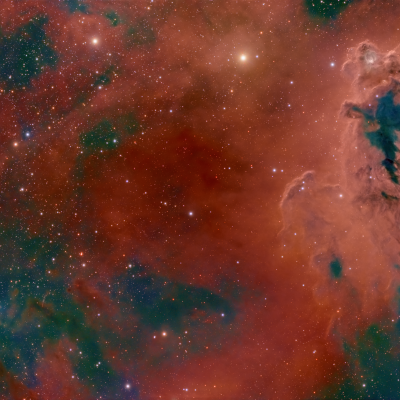
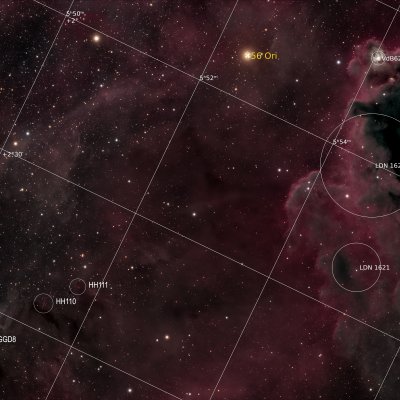
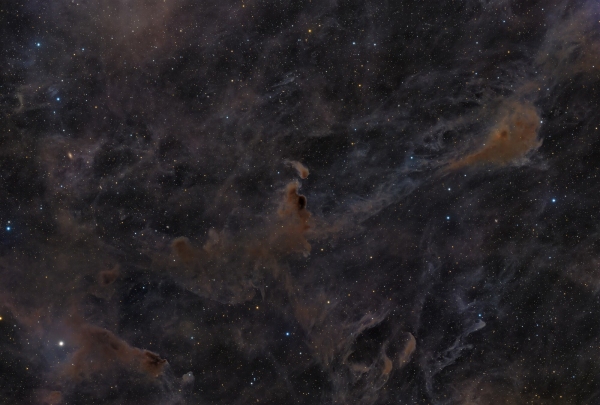
The framing may be a bit controversial, but the goal of this shot - besides LDN 1622 - was also to capture the Herbig–Haro object HH 110 (credit for the framing idea goes to Marco, one of subscribers - thanks!).
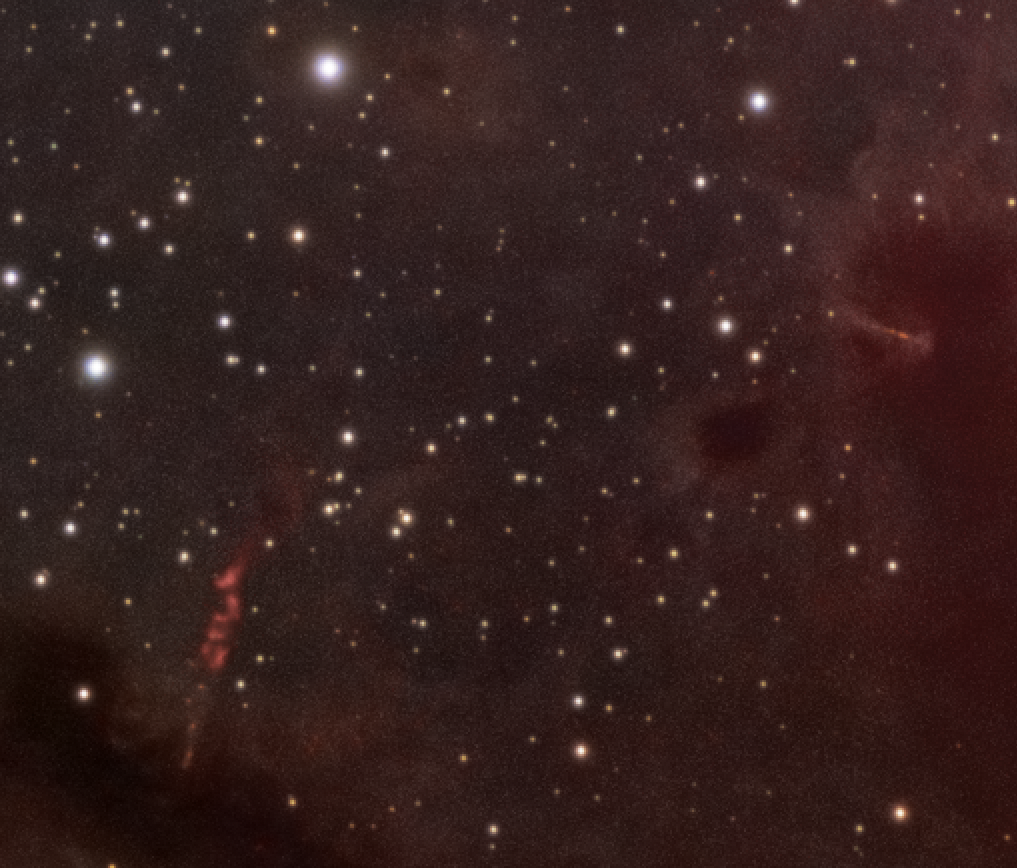
These are barely visible, tiny objects in this image, but they are shown at a much better scale in an image by Wolfgang Promper:
https://app.astrobin.com/u/Wolfgang-Promper?i=qdzw3l#gallery
As you can see, even with a much smaller telescope compared to what Wolfgang uses, it was still possible to capture them.
Herbig–Haro 110 (HH 110) is a glowing jet of matter ejected by a very young star. Herbig–Haro objects form when a fast stream of gas collides with the surrounding medium, exciting it and causing it to emit light.
What makes HH 110 special?
HH 110 has been described as a long, sinuous jet with numerous bright knots. This is not a calm nebula, but rather a record of violent flows of matter and shock waves in a star-forming region.
In this image, we capture a region on the scale of a fraction of a parsec, yet processes of enormous energy are taking place there: gas moves at speeds of hundreds of kilometers per second, collides with the surrounding medium, becomes ionized, and begins to glow in characteristic emission lines. It’s one of those objects that clearly shows that star formation is a highly dynamic process—not just a “quiet condensation” of matter.
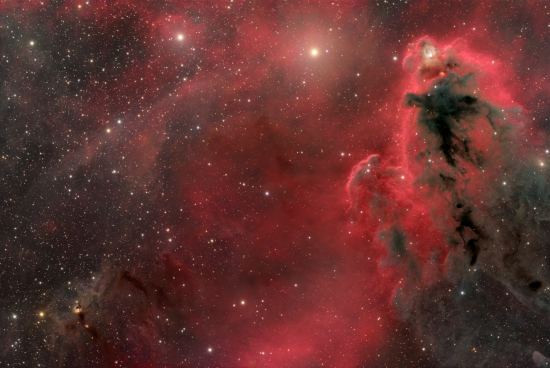
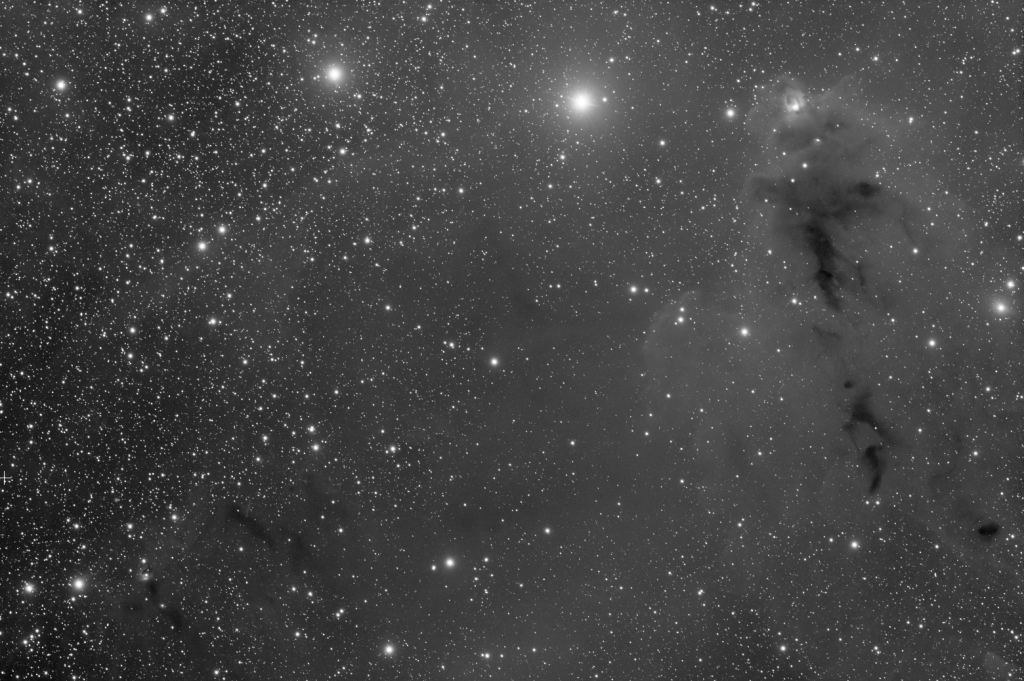
Luminance is a combination of the 107 x 300 from ASI 2600MM and the rest is from ASI294MM paired with the TS-130 refractor.
 Haz clic para ampliar

 Haz clic para ampliar