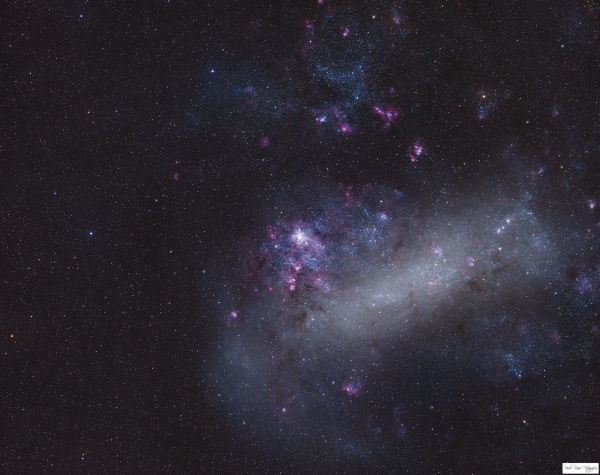
Description
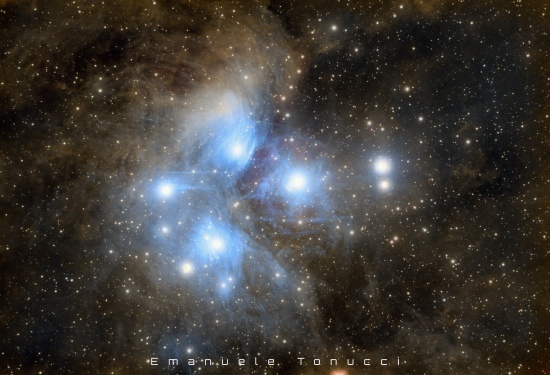
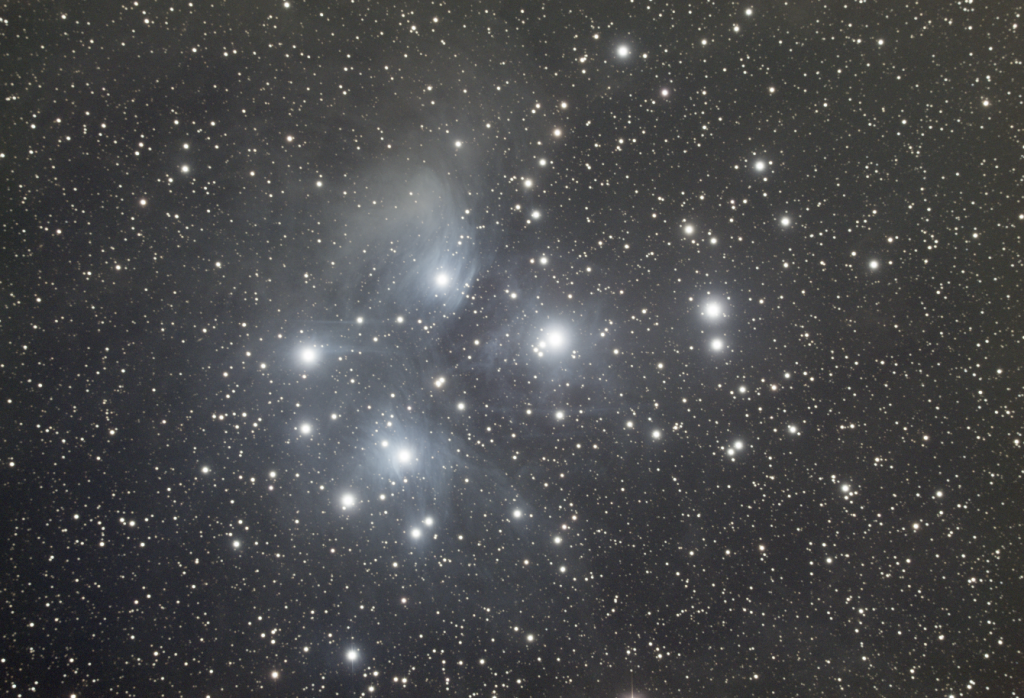
The Pleiades, also known as M45 or the “Seven Sisters,” are one of the most famous and easily recognizable star clusters in the night sky. Located in the constellation Taurus, about 440 light-years from Earth, they are among the closest and most studied open clusters of their kind.
I bought my Tecnosky OWL 90/540 precisely to photograph the Pleiades!
To the naked eye, on clear, dark nights far from light pollution, you can distinguish six or seven main stars, but through binoculars or a small telescope you can see over a hundred. The stars appear grouped in a tight, brilliant cluster, visible for most of the year in the northern winter sky.
The Pleiades are an open cluster made up of very young stars, with an estimated age of about 100 million years. They all formed from the same molecular cloud of gas and dust, which is why they share a common chemical composition and motion through space.
The main members are B-type stars — hot, bluish, roughly five times more massive than the Sun and hundreds of times more luminous.
When photographing the Pleiades with long exposures, a delicate bluish nebulosity appears surrounding the brightest stars. This is not the remnant of the original cloud from which they were born, but rather interstellar dust that the cluster is currently passing through — dust that reflects the blue light of the hottest stars.
The name “Pleiades” comes from the Greek Πλειάδες (Pleiádes), related to Πλεῖν (pleîn) meaning “to sail”; their appearance in the autumn night sky marked, for the ancient Greeks, the beginning of the navigation season.
In mythology, they were the seven daughters of Atlas and Pleione, pursued by Orion, the hunter — who still seems to chase them across the heavens.
Many civilizations — from the Maya to the Maori, from the Japanese (Subaru) to Native American tribes — have recognized and revered this cluster, attributing to it various names and spiritual meanings.
Telescope: Tecnosky OWL 90/540 @ 432 mm
Reducer: Tecnosky 0.8x
Mount: Celestron CGX
Camera: Player One Artemis-C Pro
Guide Camera: Player One Xena-M
OAG: Player One
Acquisition Software: N.I.N.A. – PHD2 – CPWI
Processing Software: Siril 1.4 Beta2 – GraXpert 3.1.0 rc2 – Photoshop (Camera Raw)
Lights: 90 × 300″ (–10 °C / Offset 30)
Darks: 25
Flats: 30
Bias: 30